Bedding · Pillow Guide
Understanding Loft and Support in The Clean Bedroom Down Pillows
A pillow is a small landscape beneath the head: its height, resilience, and response to weight can shape the way a night’s rest feels. Understanding loft and firmness makes it easier to assess whether a down pillow’s construction suits your sleep habits.
Published October 14, 2026
At bedtime, a pillow seems simple. It is a soft surface, folded into place beneath the head. But inside that familiar shape, fibers and chambers respond to pressure, warmth, movement, and time. A pillow that appears tall on a freshly made bed may settle beneath the weight of a sleeper. Another may compress quickly, then spring back when the head lifts. These differences are part of what people mean by loft and support.
Loft describes a pillow’s height, especially its height when uncompressed. Firmness describes how much resistance it offers as weight presses down. The two qualities are related, but they are not interchangeable: a lofty pillow can feel soft, medium, or firm, depending on its fill, construction, and the way that fill is contained. For sleepers, the useful question is not simply, “How high is it?” but “What happens to that height when I lie down?”
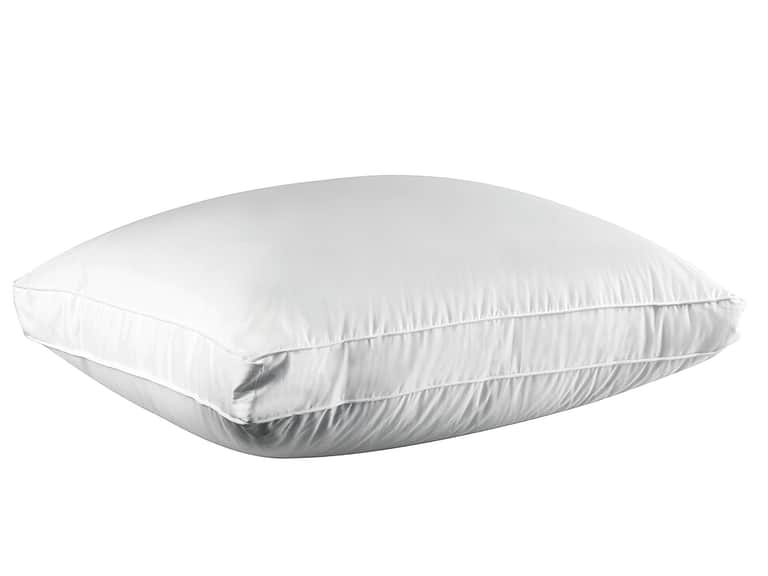
The Clean Bedroom Manhattan Down Pillow offers a practical example. It is described as medium-firm with high loft, filled with 850 fill power large-cluster Hungarian goose down, and finished with a two-inch gusset. Its cotton shell and stitched edges add further details to consider. Together, these features illustrate how fill, shape, and fabric can influence the experience of a down pillow.
What pillow loft means
Loft is the distance a pillow rises above the mattress. In everyday terms, it is the pillow’s height. Yet that measurement alone does not tell the whole story. A pillow’s useful loft changes under load: a sleeper’s head presses the fill down, and the pillow’s response determines how much height remains between the head and mattress.
Imagine two pillows on a bed. One is tall and airy when untouched but compresses substantially when someone lies down. The other looks more modest yet resists compression. Their starting heights may be similar, but the sleeping experience can differ. Fill type, fill quantity, chamber design, fabric, and construction all help determine how a pillow behaves after contact.
Down is valued for its lightness and ability to expand into a lofty form. Down clusters can trap air, creating loft without the dense feel of some heavier materials. When pressure is removed, the clusters may recover some of their volume. The degree of loft and recovery varies with the down’s characteristics and the pillow’s overall design, so a label or specification is best treated as one piece of information rather than a complete prediction of comfort.
Loft is also not a measure of quality by itself. A very high pillow may feel comfortable to one person and awkward to another. A lower profile may be just right for a particular sleeper. The goal is a position that feels natural and does not require the sleeper to continually bunch, fold, or reposition the pillow.
Firmness and support: related, but different
Firmness describes the sensation of resistance. When a pillow is pressed, does it give way readily, or does it push back? Support refers more broadly to how the pillow helps maintain a comfortable position as it compresses. A soft pillow may still provide useful support if its construction keeps enough height beneath the head. A firmer one may not feel supportive if its height or shape is poorly matched to the sleeper.
These terms are sometimes used as if they mean the same thing, but they describe different parts of the experience. Firmness is a feel; support is a functional outcome. Both depend on the sleeper and the bed. Body shape, mattress softness, shoulder width, and preferred sleep position can change how a pillow feels in use. Even the way a person settles into bed can affect the amount of pressure placed on the fill.
For that reason, a product description such as “medium-firm, high loft” is a useful starting point—not a promise that the pillow will feel identical to every sleeper. It provides a general picture of the design. Personal preference and fit still matter.
Inside the Manhattan Down Pillow
The Manhattan Down Pillow combines several construction details that help explain its profile. The manufacturer describes it as medium-firm with high loft and lists 850 fill power large-cluster Hungarian goose down. The pillow also has a two-inch gusset, a 330-thread-count cotton shell, and double-stitched piping. Each detail plays a different role in the pillow’s structure and feel.
Fill power and down clusters
Fill power is a measure of the space a given weight of down can occupy under a standardized test. It is commonly used to describe down’s lofting ability. A higher fill-power figure indicates that the down can take up more volume relative to its weight; it does not, by itself, tell a shopper how firm a pillow will feel or whether its height will suit a particular sleeping position.
The Manhattan pillow’s stated 850 fill power points to a high-lofting down fill. Large clusters are part of the product description as well. Down clusters contribute to the light, airy character associated with down bedding, while the pillow’s fill quantity and construction influence how those clusters behave in the finished form. For a useful comparison, consider fill power alongside pillow dimensions, firmness description, and any information about the pillow’s design.
The role of a gusset
A gusset is a side panel that gives a pillow more depth and helps define its shape. On the Manhattan pillow, the two-inch gusset creates a fuller, more structured edge than a simple seam joining the top and bottom panels. That extra depth is intended to support the pillow’s loft and provide a more substantial profile.
Shape matters because fill does not act in isolation. A gusset helps contain the pillow’s form around its perimeter, while the fill shifts and compresses under pressure. The result can feel different from a pillow with a flat edge, even when both use similar filling. The double-stitched piping adds a finished, reinforced edge, helping secure the construction around the perimeter.
The shell fabric
The pillow’s outer cover is described as tightly woven, soft 100% cotton with a 330-thread-count construction. The shell is the boundary that holds the fill in place and is also the fabric in direct contact with a pillowcase. Its weave and hand contribute to the overall impression of the pillow, while the seams and stitching help maintain the enclosure. The shell is not a substitute for a pillow protector, but it forms an important part of the product’s design.
How sleep position can inform loft
Sleep position offers a useful way to think about pillow height, though it cannot provide a universal formula. The central aim is a comfortable, relatively neutral resting posture rather than a particular number of inches. The mattress also matters: a shoulder may sink farther into a soft surface than into a firmer one, changing the space a pillow needs to fill.
- Side sleeping: A sleeper’s shoulder creates space between the head and mattress. Some side sleepers prefer a higher or more substantial pillow to fill that space, but shoulder width, mattress give, and personal comfort all affect the choice.
- Back sleeping: Many back sleepers look for a height that feels balanced beneath the head and neck, without pushing the head noticeably forward. The right feel varies with body shape and the pillow’s compression.
- Stomach sleeping: Some stomach sleepers prefer a lower, more compressible pillow, while others choose a different arrangement. A lofty pillow may feel too elevated for people who want their head closer to the mattress.
- Combination sleeping: People who change positions may value a pillow that responds to movement and can be adjusted by shifting or gently reshaping the fill.
These are considerations, not rules. A person’s comfort is the final test, and persistent pain or sleep concerns are best discussed with a qualified health professional. Pillow descriptions cannot diagnose or treat a medical condition.
Who might appreciate a high-loft, medium-firm feel?
The Manhattan Down Pillow may appeal to sleepers who like a visibly full pillow and want a balance between softness and resistance. Its high-loft description points to a substantial profile, while the medium-firm rating suggests a feel that is not intended to be either especially yielding or rigid. The two-inch gusset reinforces that fuller shape.
Still, there is no single pillow that suits every head, neck, mattress, or sleeping style. Someone who prefers a low profile may find a high-loft design too elevated. A sleeper who wants a very firm, stable surface may prefer a different construction. Someone who enjoys a plush, responsive pillow may be drawn to down’s light and yielding character, but should consider how much loft remains under their own weight.
When possible, assess a pillow in the position in which it will be used. Notice whether the head feels comfortably supported, whether the pillow stays in place, and whether it can be adjusted without becoming lumpy or uneven. If trying it in person is not practical, compare the listed dimensions, firmness description, fill details, and return policy before deciding.
For readers considering this particular design, The Clean Bedroom Manhattan Down-Filled Pillows are listed in standard, queen, and king sizes. The product information gives dimensions of 20 by 26 inches for standard, 20 by 30 inches for queen, and 20 by 36 inches for king. Size affects how the pillow fits a bed and pillowcase; it does not, on its own, determine whether the loft is a personal match.
Questions to ask before choosing a pillow
A few practical questions can make product specifications more meaningful. Rather than relying on a single headline term, consider how the pillow may work in your own sleep setting.
- What position do I use most often? This can help you think about the space between your head and mattress.
- How soft is my mattress? A softer mattress may allow the shoulder and upper body to settle more deeply, changing the pillow height that feels comfortable.
- Do I prefer a pillow that yields or one that pushes back? This preference can clarify whether a medium-firm description sounds appealing.
- Do I reshape my pillow during the night? Down can be shifted and fluffed, but the amount of adjustment needed is a personal consideration.
- What care does the label recommend? Down products may require particular washing and drying methods. Follow the manufacturer’s instructions rather than assuming all pillows can be treated alike.
These questions help translate abstract specifications into an everyday context. The terms “high loft” and “medium firmness” become more useful when compared with a sleeper’s habits, mattress, and preferred feel.
Care, resilience, and the life of a down pillow
Down is a natural fill that can shift with use. A pillow may look compressed after a night’s sleep, especially where the head has rested. Gentle fluffing can help redistribute the fill and restore a more even profile, although recovery depends on the pillow’s condition and construction. A washable pillow protector can help shield the shell from everyday oils, moisture, and dust, reducing the need to clean the pillow itself as often.
Care instructions deserve close attention. Washing and drying requirements vary by product, and improper handling can leave down damp or unevenly distributed. Check the sewn-in care label and the manufacturer’s guidance before laundering. If the pillow is washed, it should be dried according to those directions, with attention to ensuring the fill is thoroughly dry. A damp interior can compromise freshness and comfort.
Regular inspection is useful, too. Look for damage to seams, changes in loft that do not respond to ordinary fluffing, or other signs that the pillow’s structure has altered. Product life depends on use, care, and household conditions; no stated fill-power value guarantees a specific number of years.
The Manhattan pillow’s product information recommends a washable pillow protector. That simple layer can make routine upkeep more manageable while preserving the shell and fill from direct contact with daily use. It does not remove the need to follow the pillow’s own care directions.
Responsible sourcing and informed choices
Materials are part of a pillow’s story as well as its feel. The product information states that the Hungarian down used in The Clean Bedroom down pillows has been tested and certified by IDFL and is sourced to the Responsible Down Standard. These details offer context about sourcing and quality-assurance claims; shoppers who want to understand a standard in depth can consult the relevant organization’s current documentation and the product’s own labeling.
Certification language should be read precisely. A sourcing standard addresses particular criteria within its scope; it does not replace an assessment of comfort, fit, care, or an individual’s needs. The most considered choice brings these strands together: how a pillow feels, what it is made from, how it is constructed, how it should be cared for, and what information is available about its supply chain.
For those interested in natural fibers and materials, this kind of close reading is a small act of design literacy. It shifts the question from “Is this pillow good?” to “What is it designed to do, what evidence supports the description, and does that design fit my life?”
Reading a pillow as a whole object
Loft is only one part of a pillow’s character. Fill power describes a property of down; fill weight indicates how much filling is used; firmness gives a broad impression of resistance; the gusset shapes the sidewall; and the shell encloses the materials. None of these details works alone. Together they form the object a sleeper encounters at night.
The Manhattan Down Pillow brings these components into a defined combination: 850 fill power large-cluster Hungarian goose down, high loft, medium firmness, a two-inch gusset, a tightly woven cotton cover, and double-stitched piping. This profile is likely to interest people seeking a full, down-filled pillow with a structured edge. Whether it feels supportive enough—or too lofty—depends on the sleeper’s body, position, mattress, and preferences.
That is the quiet lesson of pillow shopping: specifications are maps, not destinations. They make comparison possible, but the experience happens when the head meets the fill. Understanding loft and support turns that moment into a more informed choice, helping shoppers look beyond height alone and toward the way a pillow holds, yields, and recovers through the night.