NYC Home Textiles · Material & Design
A Manhattan Apartment Guide to Bath Towels That Dry Between Showers
In a compact bathroom, a towel has a job beyond feeling soft. It must absorb water, hang without monopolizing a hook, dry before it is needed again, and live comfortably with limited storage. Choosing well means thinking about fiber, weave, weight, airflow, and the small daily routines that shape apartment life.
In a large house, a damp towel can be spread over a broad rail or carried to a sunlit laundry room. In a Manhattan apartment, the same towel may hang from the back of a door, share a narrow bar, or dry in a bathroom with little space between the shower and the sink. The difference is not merely architectural. It changes which textiles work best.
A bath towel is a small study in domestic design. Its loops or woven texture meet the skin; its fiber takes up moisture; its dimensions determine how much room it occupies; and its weight influences how quickly it dries after use. Color and finish matter, too, but the most beautiful towel is less satisfying if it stays damp until the next shower.
For city dwellers, the useful question is not simply, “Which towel is softest?” It is, “Which towel suits this room, this ventilation, and this routine?” That shift makes the choice more practical—and opens a wider conversation about the materials that make up a home.
Read the room before choosing the towel
Bathrooms differ in ways a floor plan cannot fully show. A window, an extractor fan, a heated rail, or a door that is often left open can all affect how quickly moisture clears. So can the household’s schedule. A towel used once each morning in a well-ventilated room faces different conditions from several towels used in quick succession in a shared, windowless bathroom.
Before buying, notice where a towel can actually hang. A hook holds fabric in one place, often folded over itself; a bar allows a wider spread. A towel that is bunched on a hook has less exposed surface for evaporation than one opened across a rail. The hanging arrangement can make a meaningful difference, even when the towel itself is unchanged.
Also consider whether the room has a persistent damp feeling after showering. If moisture lingers on walls or mirrors, a heavier towel may take longer to become fully dry. Better airflow can help textiles and the room alike: use an existing fan as directed, leave the bathroom door open when privacy and household routines allow, and give the towel as much space as possible. A towel cannot compensate for poor ventilation, but a more suitable fabric can make the everyday routine easier.
- Measure the available hanging space. A generous bath sheet may be comfortable but awkward on a short bar.
- Count the drying spots. Shared hooks and rails are part of the towel decision, especially in busy households.
- Think about laundry frequency. A small rotation of towels may be more workable than relying on one thick towel to dry quickly.
- Observe the room’s airflow. A towel spread out in moving air is likely to dry more readily than one left folded in a humid corner.
Weight, absorbency, and the drying-time trade-off
Towel weight is commonly expressed in grams per square metre, or GSM. It describes the mass of the fabric over a given area, not a complete measure of quality. A higher GSM towel often feels more substantial and may offer a plush, enveloping hand. It also contains more material, which can mean it takes longer to dry, depending on fiber, weave, size, washing, and room conditions.
A lighter towel may be easier to handle, store, and hang in a compact space. That does not automatically make it more absorbent or more durable: construction and fiber matter as well. Instead of treating weight as a score, treat it as one clue about how the towel may behave. Ask whether its feel and drying pace make sense for the bathroom you have.
The most luxurious towel in a showroom can feel different at home. In a tightly packed linen cupboard, a thick stack claims valuable shelf space. On a crowded hook, a heavy towel can fold over itself and keep its inner layers damp. A moderate-weight towel with a texture that opens readily may be a better everyday fit, while a thicker towel can be reserved for a room with a wide rail and good ventilation.
Absorbency is equally nuanced. A towel needs to take up water comfortably, but the fabric’s ability to do so does not tell you exactly how soon it will dry. A high-pile surface has many loops that can meet the skin and hold moisture; that same depth can also leave more damp fabric gathered together when the towel is folded. A more open or textured construction may feel less conventionally plush while allowing air to move across more of its surface.
Cotton terry and linen: different kinds of comfort
Cotton terry is familiar for good reason. Its loops create a soft, cushioned surface that many people associate with a classic bath towel. Terry towels vary widely in pile, weight, density, and finishing, so the word “cotton” alone cannot predict how a particular towel will feel or dry. A dense, heavy towel and a lighter terry towel may perform very differently in the same small bathroom.
Linen offers another tactile vocabulary. Made from flax fiber, it is often recognized by a dry hand, visible texture, and a fabric character that may soften with use and laundering. Linen towels are not simply thinner versions of plush terry; the weave and surface create a different experience against the skin. Some people enjoy the lively, lightly textured feel, while others prefer the cushioning of cotton loops.
For apartment living, linen can be worth considering because certain linen towel constructions are comparatively light and can be easier to hang in limited space. But material alone is not a guarantee of rapid drying. Room humidity, how the towel is spread, the amount of fabric, and the specific weave all play a part. Look at the stated weight and construction, then think about how those details align with the bathroom’s conditions.
The distinction is useful beyond bath textiles. In a home, fabrics are experienced in motion: a sheet is pulled across a bed, a curtain catches the air, a towel is folded after a shower. Material choice is not only a question of appearance. It is a negotiation between touch, care, space, and the rhythms of daily life.
A closer look at waffle weave
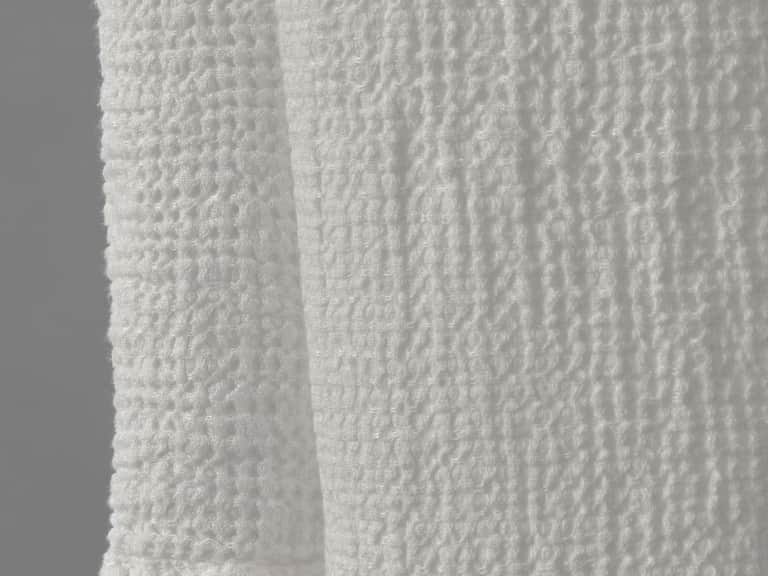
Waffle construction creates a raised, recessed surface rather than the dense field of loops associated with terry. The small pockets and ridges add texture and give the fabric a distinctive dimensional appearance. Depending on its fiber and weight, a waffle towel can feel lighter and less bulky than a plush alternative, a practical quality when hooks and shelves are scarce.
One example is the Lipe New Bath Towel, a 100% linen towel with a three-dimensional waffle weave and a stated weight of 230 g/m². Its product description characterizes the fabric as absorbent, easy-drying, and hard-wearing, and notes a natural froissé texture. Those details make it a useful point of reference for readers weighing linen against more conventional terry: here, material and construction work together to create a textured, relatively light-feeling bath textile.
As with any towel, the actual experience depends on personal preference and use. A textured surface may not feel as plush as a thick looped towel, and a towel’s stated properties cannot promise a particular drying time in every bathroom. Consider it in context: how much room is available on the rail, whether the towel can be spread out, and whether the household prefers a cushiony or more tactile feel.
Brand names can help orient research, too. Libeco is one name readers may encounter when exploring linen textiles. Rather than choosing on a label alone, compare the information supplied for each item: fiber content, weight, construction, origin where stated, and care instructions. Clear product details make it easier to judge whether a textile fits both your taste and the realities of your home.
Texture is part of the room’s design
In a small bathroom, towels often remain in view. Their color and surface become part of the room whether or not the space was designed around them. A stack on a shelf can introduce a quiet band of color; a towel hanging by the shower can soften hard tile and polished fittings. Texture is especially noticeable in a compact room, where there may be few other fabric elements.
Natural-looking shades—ivory, stone, muted grey, or earthy tones—can create a restrained backdrop, while deeper colors provide definition. The right choice depends on the bathroom’s finishes and on how much visual calm the household wants. Matching every towel can make a shared bathroom feel orderly; a considered mix of tones can make it feel more personal. Neither approach changes drying performance, but both affect the way practical objects contribute to a home’s character.
Carefully chosen towels can also make limited storage look intentional. Folded edges turned in the same direction, a small stack arranged by size, or a consistent palette can create visual order without adding furniture. The point is not to make an apartment resemble a hotel. It is to let useful objects sit comfortably in the space they occupy.
A care routine for a small-bathroom towel
Good care begins with the label. Follow the instructions supplied for the specific towel, since linen, cotton, blends, dyes, and finishes may call for different handling. Avoid assuming that every natural-fiber textile should be washed or dried in the same way. Care choices influence hand, appearance, and service life, and an overly aggressive routine can be harder on fabric than necessary.
After use, open the towel fully if possible. A towel folded into a compact bundle may feel tidy, but it exposes less fabric to air. Shake it out, spread it across the bar or rail, and avoid letting its lower edge rest against a damp floor or shower curtain. If hooks are the only option, use separate hooks when available so towels do not press tightly together.
Laundry habits matter as well. Washing towels regularly helps keep the household routine fresh, but the appropriate schedule depends on how often the towel is used, how quickly it dries, and the needs of the household. Do not overload the washing machine: crowded textiles have less room to move through the wash and rinse. Use detergent according to its directions, and take care not to use more than needed. If a towel’s care label allows machine drying, follow its temperature guidance and avoid leaving it in heat longer than necessary.
Fabric softener can change the surface feel of some textiles and may affect absorbency over time. Because finishes and fibers vary, consult the care label and manufacturer’s guidance before adding products to the routine. When in doubt, a measured, straightforward approach—appropriate detergent, correct load size, and thorough drying—is a sound place to begin.
- Hang the towel open rather than doubled into a thick fold whenever space allows.
- Keep the towel separated from other damp textiles so air can reach more of its surface.
- Follow the specific washing and drying directions supplied with the towel.
- Allow towels to dry fully before folding them into a shelf or cupboard.
Build a rotation that works for real life
A towel that dries between showers is partly a product choice and partly a household system. If several people use the same bathroom, decide which towel belongs to whom and where each one hangs. That small arrangement can prevent a row of damp layers from accumulating on a single hook. In a very limited bathroom, a second drying location outside the room may help, provided it is clean, ventilated, and convenient enough to become part of the routine.
A modest rotation can also be more useful than buying a large stack of towels that do not fit the cupboard. Think about how often laundry is done, how many people share the space, and whether a hand towel needs a separate place. The answer will differ from home to home. A compact shelf may favor a few lighter, easy-to-store towels; a household with regular laundry access may choose a different balance.
When comparing options, use a short checklist rather than being guided by softness alone:
- Fiber: Is it linen, cotton, or a blend, and does that match the feel you enjoy?
- Construction: Is the surface terry, waffle, or another weave?
- Weight: Is the towel substantial enough for your preference without being cumbersome in your bathroom?
- Dimensions: Will it fit the available rail and fold into the storage space?
- Care: Are the washing and drying directions compatible with your household routine?
The best choice is the one that fits the apartment
There is no universal bath towel for Manhattan living. One bathroom may have an open rail and dependable airflow; another may depend on a single hook and a narrow shelf. One household may prize the familiar cushion of cotton terry, while another may prefer linen’s textured hand and less bulky profile. A sound decision begins by matching fabric and construction to the conditions at home.
In that sense, towel shopping is a small exercise in reading a room. Look at where moisture gathers, notice how the existing towels are stored, and pay attention to how long they remain damp. Then compare material, weave, weight, and care details with those observations. A towel that dries reliably and has a texture you enjoy is more valuable than one selected for appearance alone.
Apartment living often asks ordinary objects to do several jobs at once. A towel must be comfortable, useful, manageable, and at home in a small landscape of tile, hooks, shelves, and shared routines. Choose with those realities in view, and even the narrowest bathroom can become a little more considered—one well-hung towel at a time.